Family portraits are more than snapshots. They freeze moments in time that matter. A well composed family photo tells the story of who you are together, right now, in this season of life.
The difference between an ordinary family photo and one you’ll treasure for decades comes down to two things: pose and composition. When you understand how to position your family members and frame the shot, magic happens. Your photos become heirlooms instead of just pictures on a phone.
This guide walks you through seventeen proven approaches to family portraiture. Each method builds on core principles of visual balance, light, and human connection. You don’t need expensive gear or a professional studio. You need intention. You need to know where to stand, how to arrange your people, and what to look for in the frame.
Whether you’re working with a photographer or taking shots yourself, these techniques will elevate your family portraits. You’ll learn how to use your environment, play with perspective, and capture genuine moments that reflect your family’s true character. The poses and compositions here work across seasons, locations, and family sizes. They’re flexible enough to adapt to your unique situation while strong enough to produce consistently strong results.
Let’s build your family portrait toolkit.
1.Outdoor Natural Settings
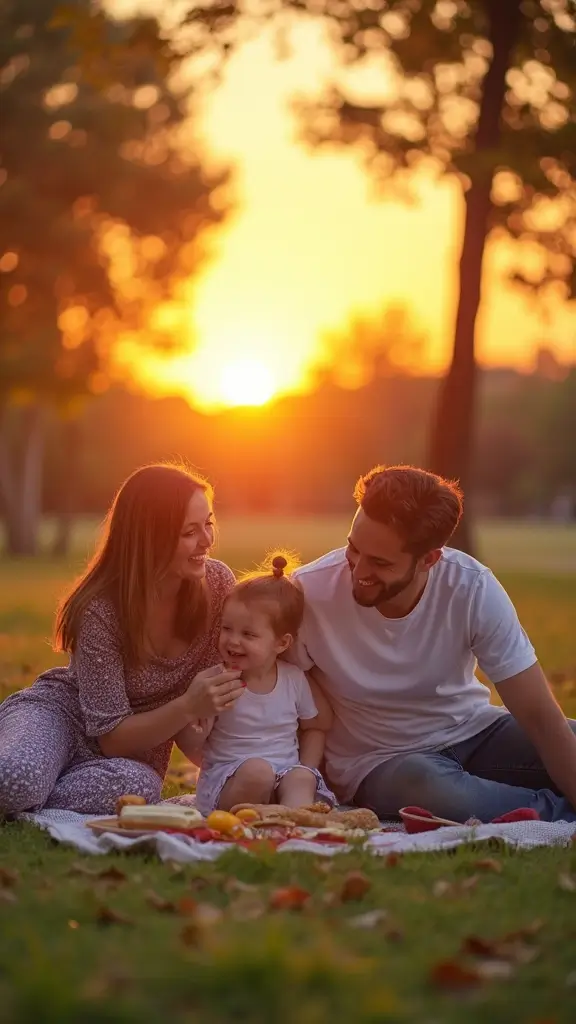
Nature provides the best backdrop. Open fields. Forests. Mountains. Beaches. Parks. Natural settings offer beauty and authenticity without requiring artificial props or studio equipment.
Choose a location that feels comfortable and meaningful to your family. Arrive early to scout the light and find the best angles. Let your family move naturally through the space. Natural settings create a sense of ease and openness. Your family will feel more relaxed outdoors than in a studio. The resulting portraits feel fresh and genuine. Natural light and natural backgrounds combine to create images that feel timeless and true.
2. Adventure and Movement
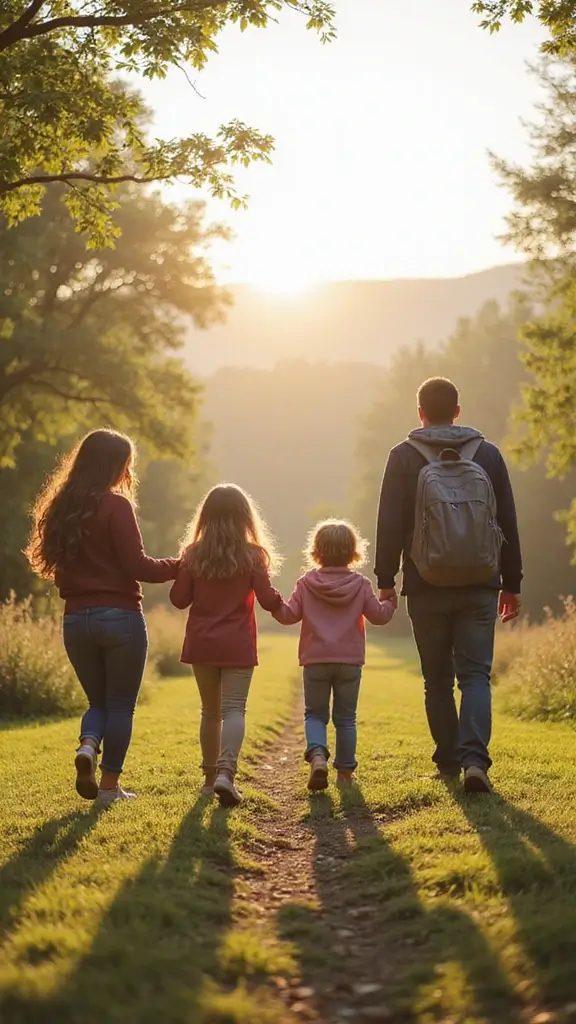
Static poses feel stiff. Real families move. Real families laugh while walking, running, or exploring together. Adventure sessions capture your family in action, doing something you actually enjoy.
Choose a location that matters to you. A hiking trail. A beach. A forest path. Have your family walk toward the camera or move naturally through the space. The photographer captures candid moments between posed shots. This hybrid approach gives you both intentional composition and genuine spontaneity. Movement adds energy to the frame. It tells the story of who you are as an active, engaged family unit.
3. Vintage and Nostalgic Styling
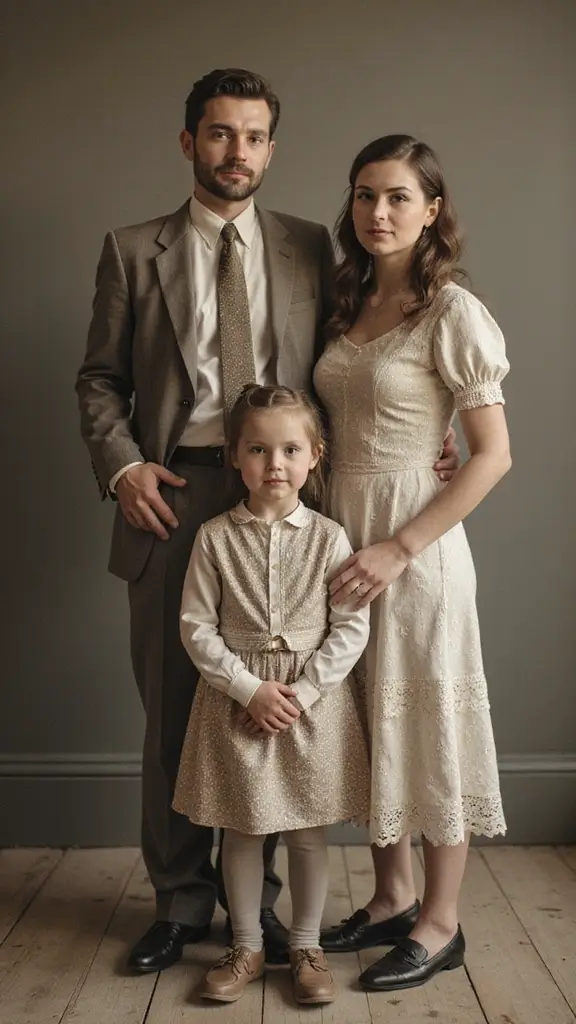
Vintage styling taps into nostalgia and timelessness. Muted color palettes, soft focus, and retro film grain create a mood that feels both classic and current. This approach works whether you’re shooting digital or film.
Think about clothing choices that evoke a specific era. Neutral tones. Simple patterns. Minimal accessories. The styling should feel intentional but not costume like. Vintage editing techniques include warm color casts, reduced saturation, and slight vignetting around the edges. These choices make modern photos feel like they were taken decades ago. The result is a portrait that transcends trend and feels like it could hang in your home for generations.
4. Reflections and Mirrors
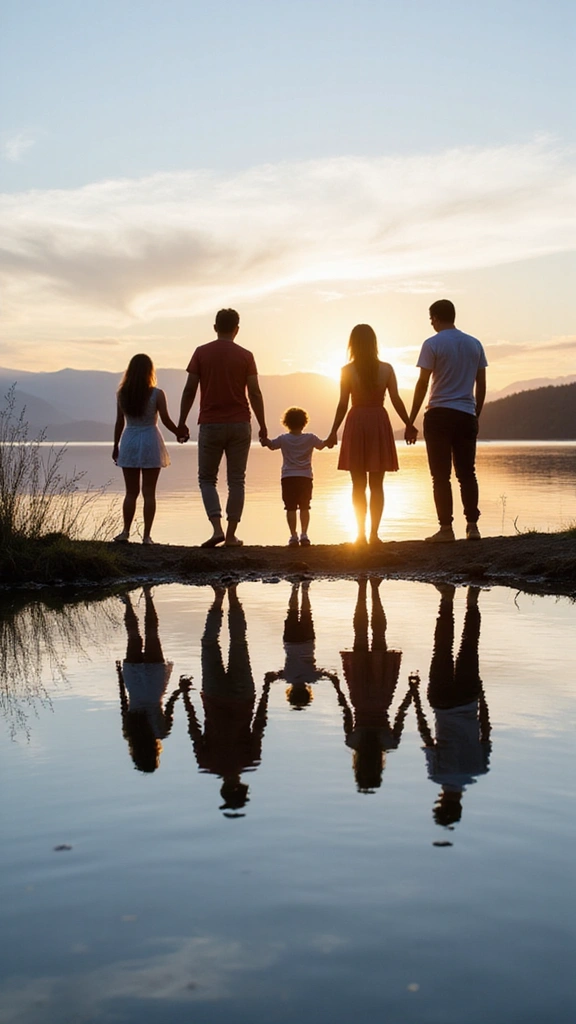
Reflections double your composition possibilities. A still pond, a puddle, a window, or a mirror creates a second layer in your frame. This technique adds visual interest and depth without requiring extra space or complicated posing.
Position your family so their reflection is visible and clear. The reflection should complement the main subjects, not compete with them. Water reflections work best on calm days. Window reflections require careful attention to glare and focus. This compositional trick draws the viewer’s eye through the frame in an unexpected way. It suggests themes of duality, connection, and the hidden depths within family relationships.
5. Leading Lines and Pathways
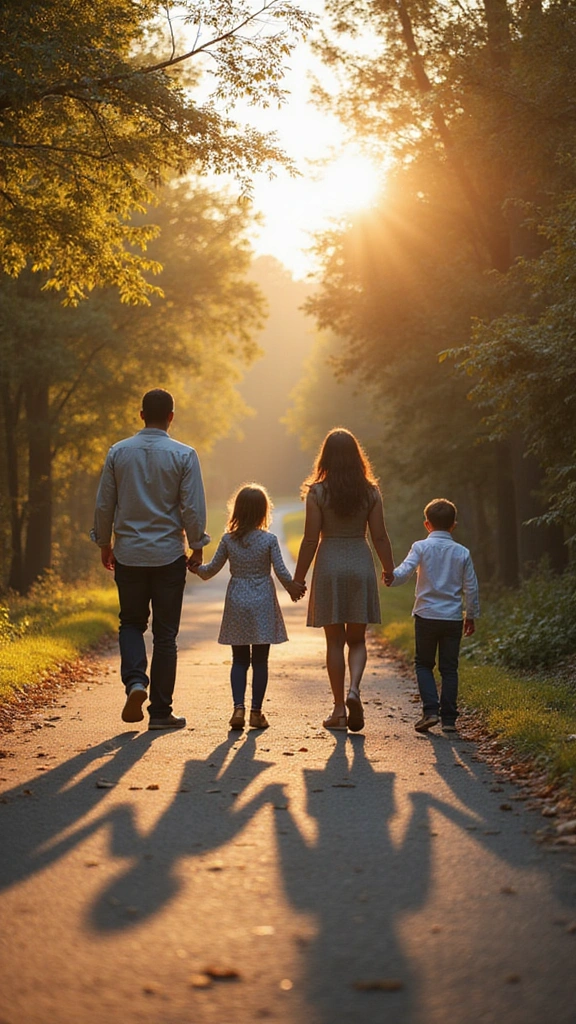
Leading lines guide the viewer’s eye through your photograph. A fence. A road. A row of trees. A shoreline. These natural or architectural lines create a sense of movement and depth.
Position your family along or perpendicular to these lines. The lines should lead toward your subjects, not away from them. Leading lines create visual pathways that make the composition feel intentional and balanced. They add dimension to what might otherwise be a flat, frontal pose. This technique works in nearly any environment. Look for lines in nature, urban settings, or man made structures. Strong leading lines transform a simple family grouping into a compelling visual story.
6. Themed and Costumed Sessions
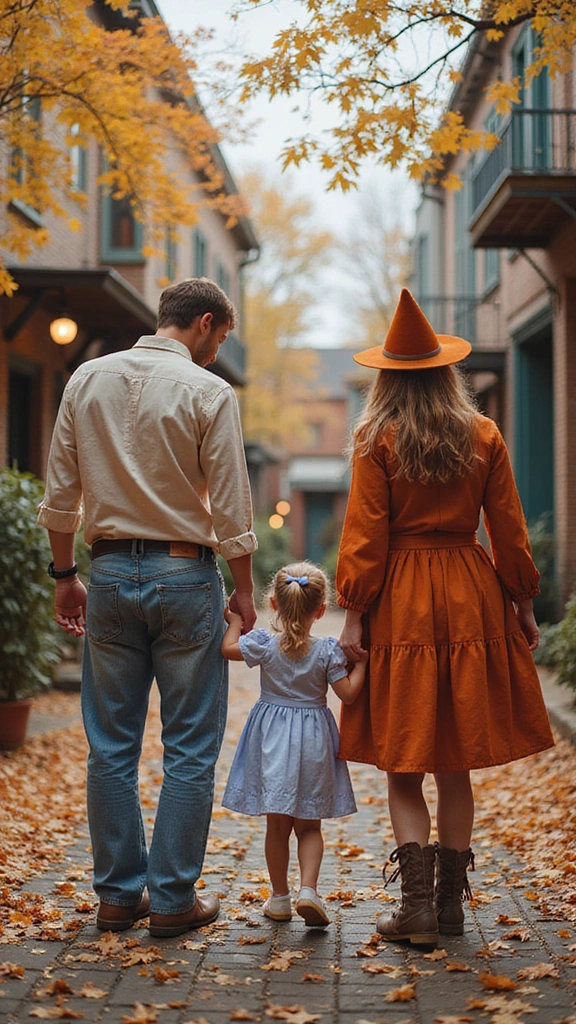
Themed shoots inject personality and fun into family portraits. Choose a concept that reflects your family’s interests or values. A favorite book. A decade. A color palette. A shared hobby.
Coordinate clothing and props around your theme. Keep it cohesive without looking like a costume party. Themed sessions give you a creative framework and a reason to try something different. They’re especially effective with families who have a good sense of humor and enjoy playfulness. The resulting photos feel unique and memorable. They capture not just how your family looks, but what makes your family distinctive and fun.
7. Travel and Location Memories
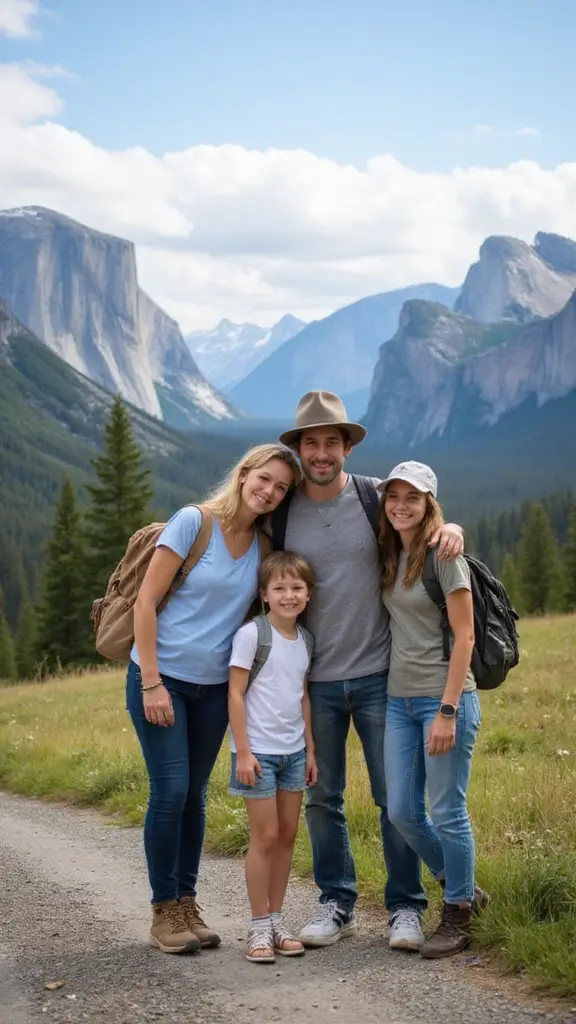
Travel destinations offer built in backdrops and natural storytelling. A family portrait taken at a meaningful location becomes a memory marker. It documents not just who you are, but where you’ve been together.
Choose a spot that matters. A national park. A city you’re visiting. A beach town. A mountain pass. Frame your family so the location is recognizable but not overwhelming. The background should enhance the portrait, not dominate it. Travel portraits serve double duty. They’re beautiful family images and visual records of your adventures. These photos remind you of the experiences you’ve shared and the places that shaped your family story.
8. Pets as Family Members

Pets are family. Including them in your portraits acknowledges that reality. A dog, cat, or other beloved animal adds warmth and authenticity to your family image.
Position the pet naturally within the group. Don’t force it into an unnatural pose. The best pet portraits happen when the animal is calm and comfortable. Have treats or toys ready to capture attention. A pet’s presence softens the composition and adds an element of genuine emotion. These images become even more precious over time, as they document a specific chapter of your family’s life with a beloved companion.
9. Milestone Celebrations
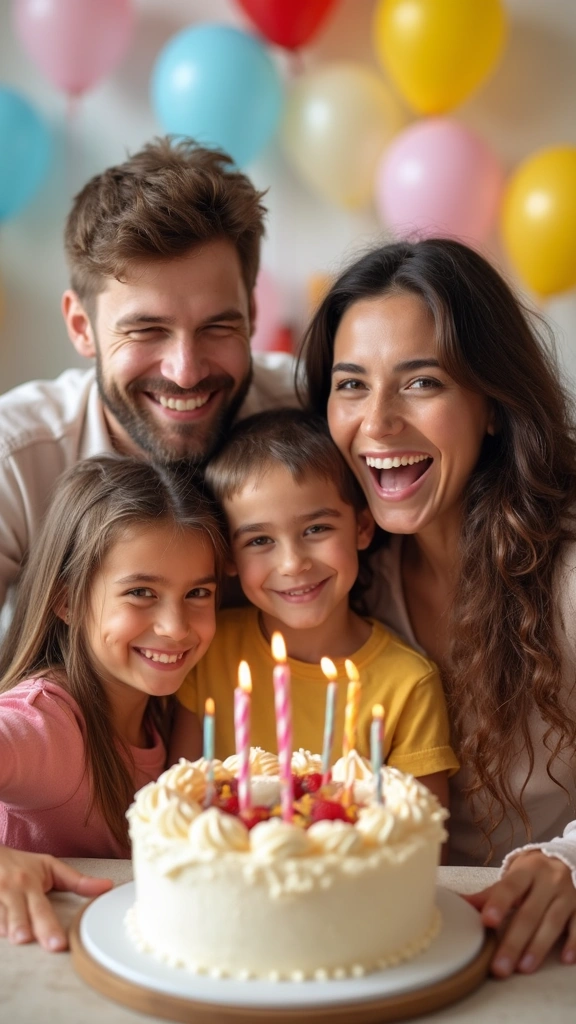
Major life moments deserve to be documented. A new baby. A graduation. An anniversary. A significant birthday. These milestones mark turning points in your family’s story.
Create a portrait that acknowledges the occasion without being heavy handed. Incorporate subtle visual elements that reference the milestone. A diploma. A baby blanket. A number. A symbolic object. Milestone portraits become anchors in your family’s timeline. Years later, you’ll look at these images and remember exactly where you were and what you were celebrating. They’re more than pretty pictures. They’re evidence of your family’s growth and evolution.
10. Storyboard and Sequential Portraits
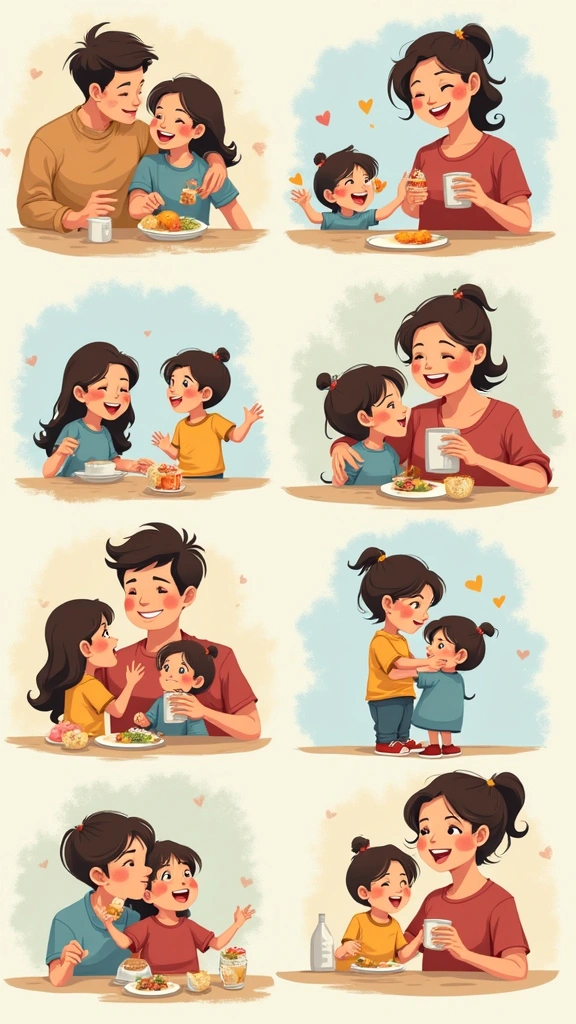
A storyboard approach captures your family across multiple poses and moments, then arranges them as a visual narrative. This technique tells a richer story than a single image can.
Plan a sequence of poses that show different facets of your family dynamic. Formal poses. Candid moments. Playful interactions. Close ups and wide shots. Arrange these images in a grid or sequence that flows naturally. Storyboard portraits work beautifully in albums or as multi frame wall displays. They give viewers a fuller sense of who your family is and how you interact. This approach also takes pressure off finding the one perfect shot. You’re creating a collection instead.
11. Playful Perspectives and Angles
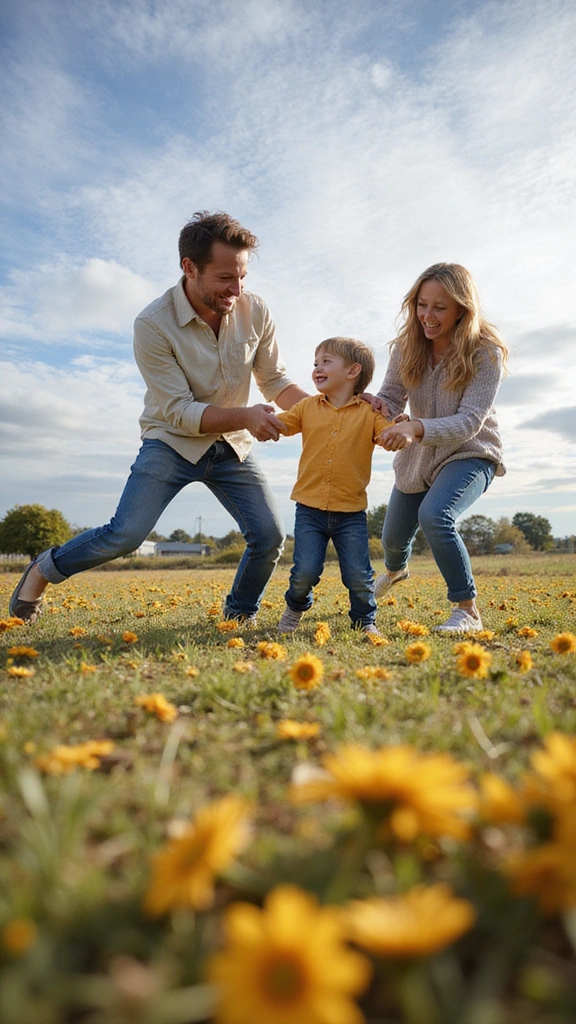
Perspective changes everything. Shooting from above, below, or at an unexpected angle transforms an ordinary pose into something visually striking. Playful perspectives add energy and creativity to your portraits.
Experiment with camera angles. Shoot from ground level looking up. Climb higher and shoot down. Position yourself at an angle rather than straight on. These unconventional viewpoints create visual interest and break the monotony of standard family photos. Playful angles work especially well with families who enjoy humor and aren’t concerned with appearing overly formal. The resulting images feel fresh and contemporary. They capture your family’s personality in a way that traditional straight on poses cannot.
12. Home and Intimate Spaces
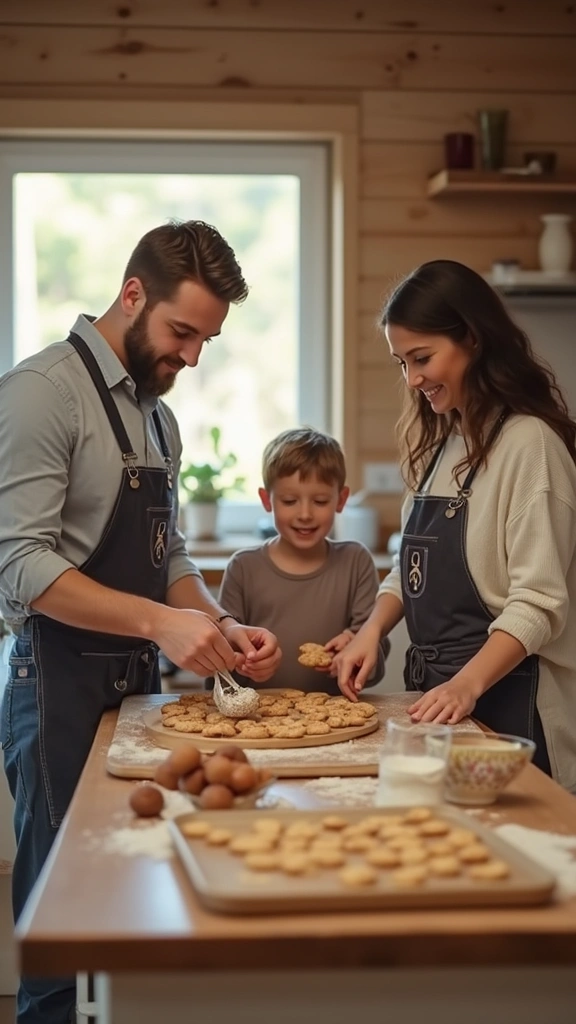
Your home tells your family’s story. The spaces where you live, eat, and gather hold meaning. Home portraits capture your family in the context of your actual life.
Choose rooms with good natural light and personal significance. A kitchen where you cook together. A living room where you gather. A bedroom. A hallway. Let your family be themselves in these spaces. Home portraits feel intimate and authentic. They’re less polished than studio shots, but more genuine. These images document your family’s everyday reality. They become precious records of the spaces you’ve shared and the life you’ve built together.
13. Coordinated and Matching Outfits
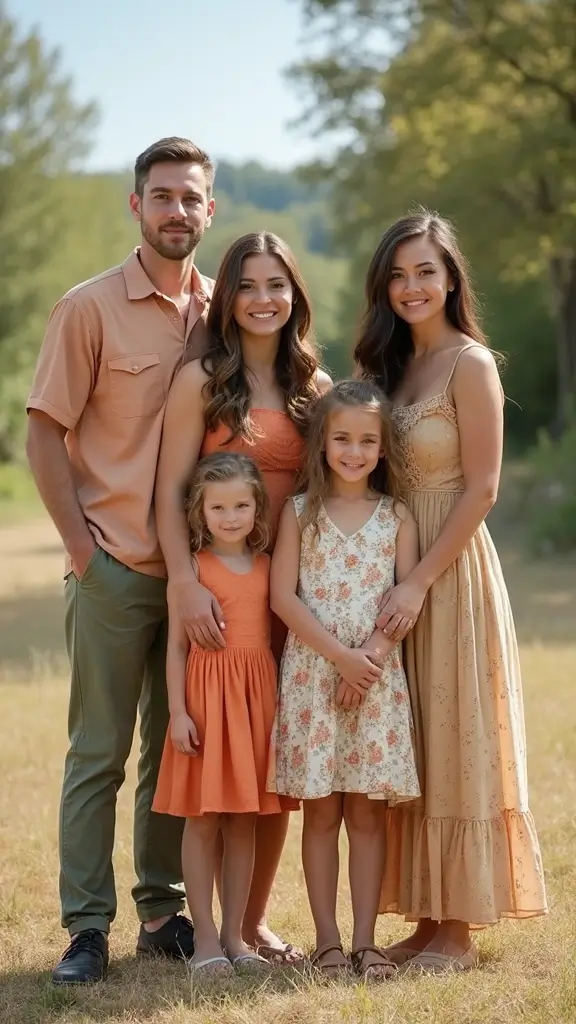
Coordinated outfits create visual unity without looking costume like. When everyone wears complementary colors or similar styles, the family reads as a cohesive unit.
Choose a color palette and let each family member select clothing within that range. Neutrals work well. Pastels work well. Jewel tones work well. Avoid exact matching, which can feel forced. Coordinated outfits simplify the visual composition. They draw attention to faces and expressions rather than competing patterns or clashing colors. This approach works across all ages and body types. It’s a subtle way to strengthen the visual impact of your family portrait without requiring special purchases or elaborate planning.
14. Family in Action and Interaction
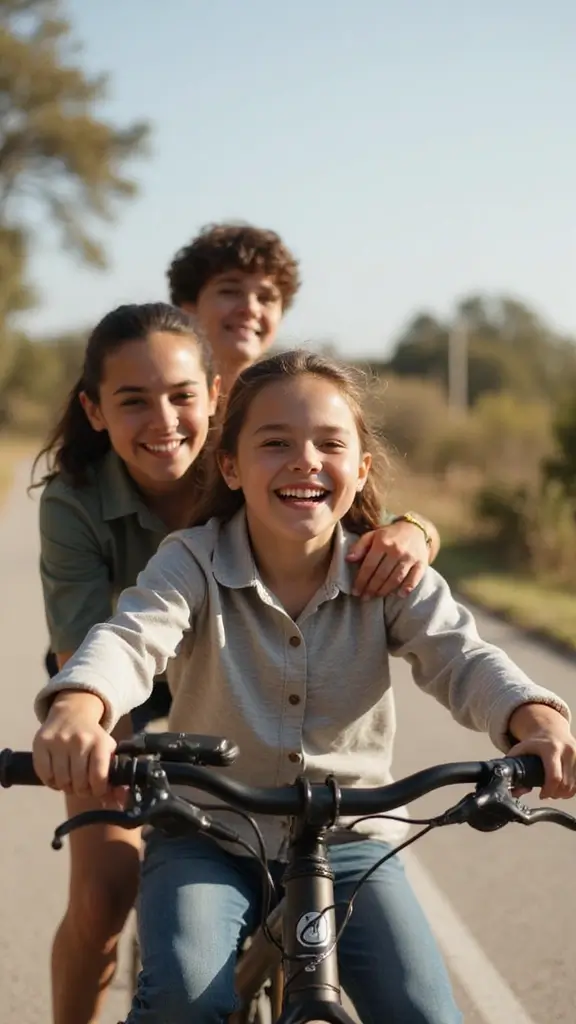
The best family portraits capture genuine interaction. A parent holding a child. Siblings laughing together. Grandparents embracing grandchildren. Real connection creates powerful images.
Direct your family to interact with each other rather than looking at the camera. Have them walk together. Play together. Hug. Whisper. Laugh. These moments of authentic connection feel alive in photographs. They reveal the bonds that hold your family together. Action and interaction portraits require patience and multiple shots. You’re waiting for genuine moments rather than posing them. The results are worth the wait. These images capture the essence of your family’s relationships in ways that formal poses cannot.
15. Silhouettes at Sunset

Silhouettes strip away detail and reduce your family to pure shape and form. Backlit by sunset or golden hour light, silhouettes become graphic and powerful. This technique works especially well with families of varied ages and body types.
Position your family between the camera and a bright light source. Expose for the bright background, leaving your subjects in shadow. The resulting silhouettes are bold and graphic. They emphasize connection and togetherness through shape alone. Silhouette portraits feel artistic and timeless. They work beautifully in black and white or color. The simplicity of the silhouette allows viewers to project their own emotions and meaning onto the image.
16. Seasonal and Weather Themes
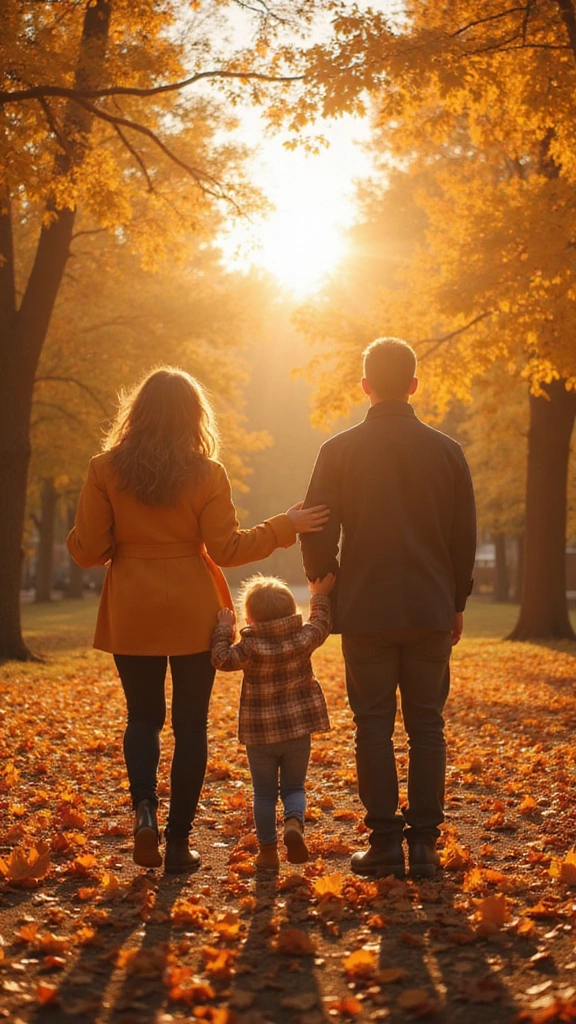
Each season offers distinct visual opportunities. Spring blossoms. Summer greenery. Fall foliage. Winter snow. Seasonal portraits document your family within the context of the natural world’s cycles.
Plan your session around seasonal elements. Incorporate natural props like leaves, flowers, or snow. Dress appropriately for the season and weather. Seasonal portraits feel connected to time and place. They mark specific moments in the year and in your family’s life. These images become visual records of seasons past. Years later, you’ll remember exactly when these photos were taken based on the natural elements visible in the frame.
17. Black and White Timelessness
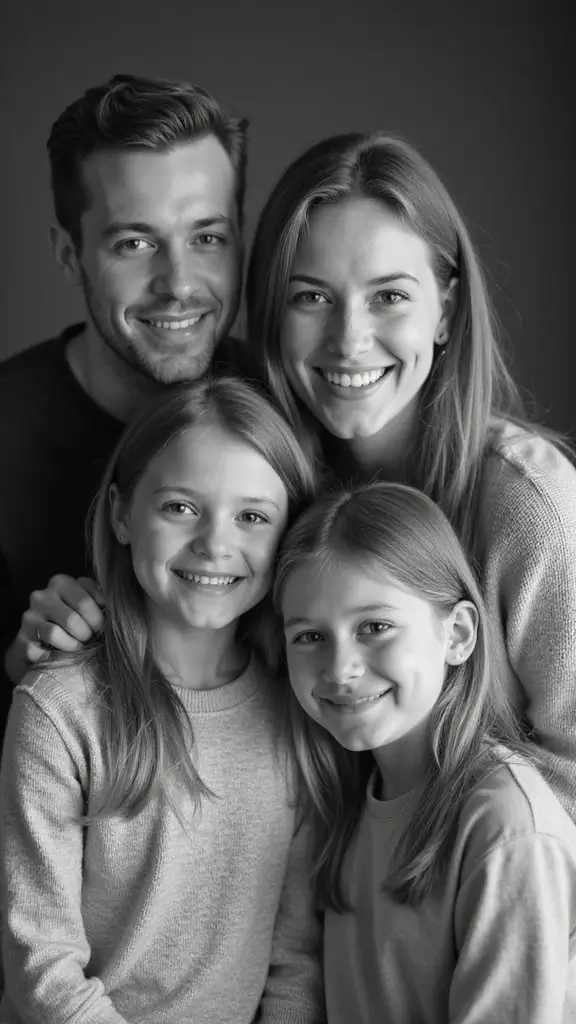
Black and white photography strips away color distraction and forces focus onto faces, expressions, and form. When you remove the variable of color, every other element becomes sharper. Skin tones matter less. Clothing blends together. What remains is pure emotion and connection.
This approach works especially well for multi generational families or when clothing colors clash. The monochrome palette creates a sense of permanence. These images feel like they belong in a frame on the wall, not just on a screen. Shoot in black and white mode or convert during editing. Pay extra attention to contrast and shadow placement. Strong shadows add dimension and drama to the composition.


Leave a Reply