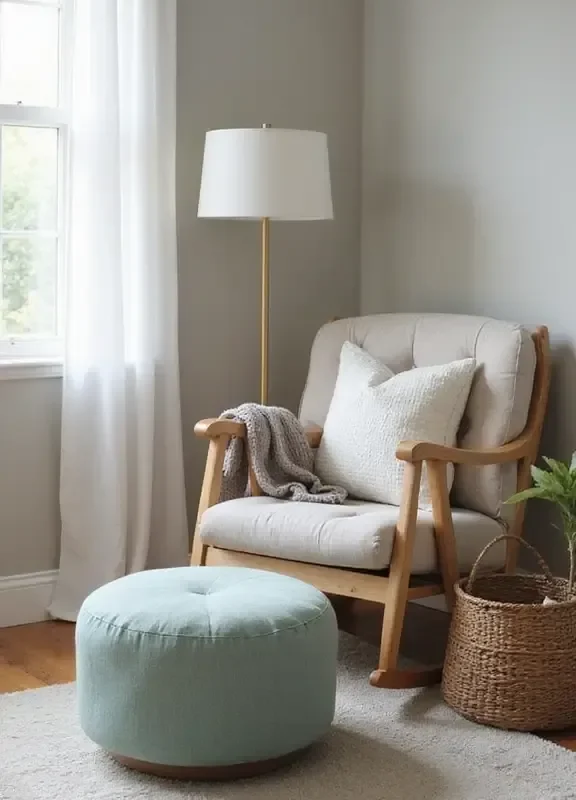
A small nursery does not have to feel cramped. With the right furniture choices and a few clever storage tricks, even the tiniest room can hold everything your baby needs. The key is thinking about every inch, from floor to ceiling, from the back of the door to the corner by the window. You do not need a large budget or a renovation. You need a plan. This guide walks through practical, tested ideas that real parents use in small spaces. Each one helps you gain room without sacrificing comfort or safety for your baby.
1. A Crib That Doubles as a Changing Table
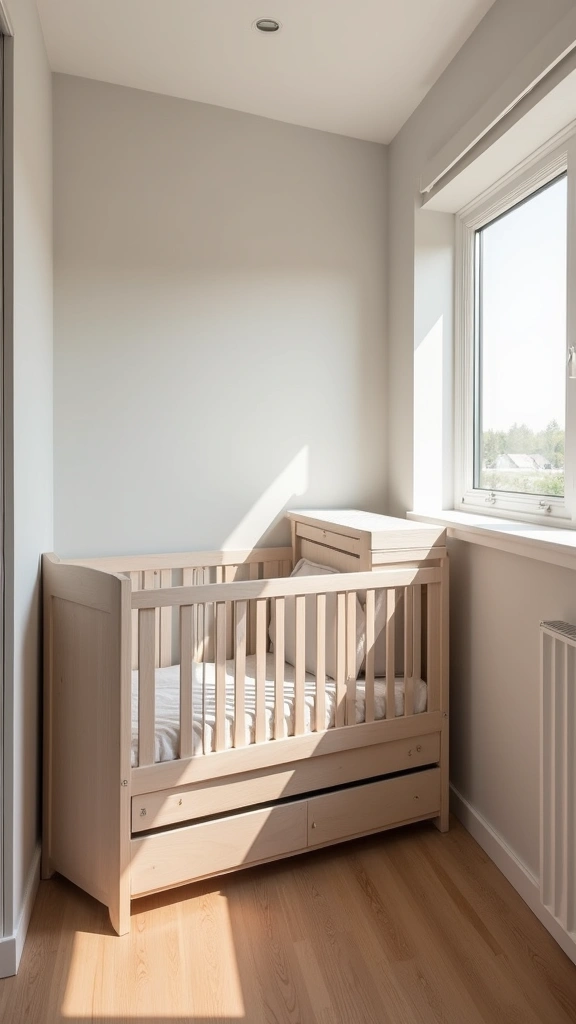
When floor space is tight, every piece of furniture needs to earn its spot. A crib with a built-in changing station gives you two functions in one footprint. You skip the standalone dresser-top changer and free up a full wall of space.
Look for models where the changing area sits at one end of the crib frame. The surface folds down or lifts off as your baby grows. This setup keeps diapers, wipes, and creams within arm’s reach without adding a second piece of furniture to the room.
2. Wall Shelves for Vertical Storage
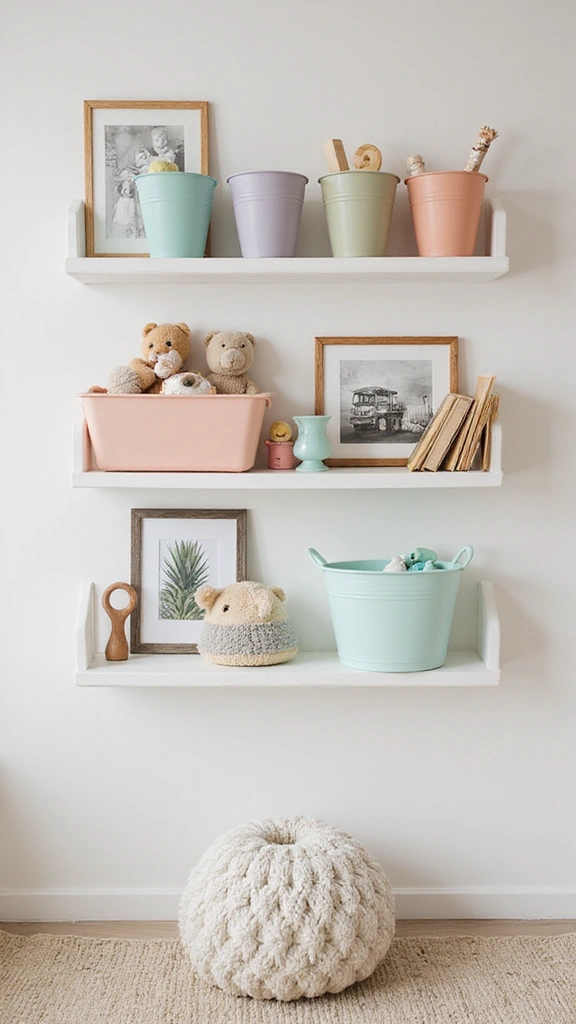
Most parents fill the floor and forget the walls. Mounting shelves high on the wall moves storage upward and keeps the floor open for movement. You can store books, small baskets, and folded items on shelves that sit well above baby’s reach.
Floating shelves work especially well in narrow rooms. They add storage without visual bulk. Keep the lower shelves for items you grab often, and use the higher ones for things you need less frequently, like seasonal clothing or extra supplie.
3. An Ottoman That Opens for Storage
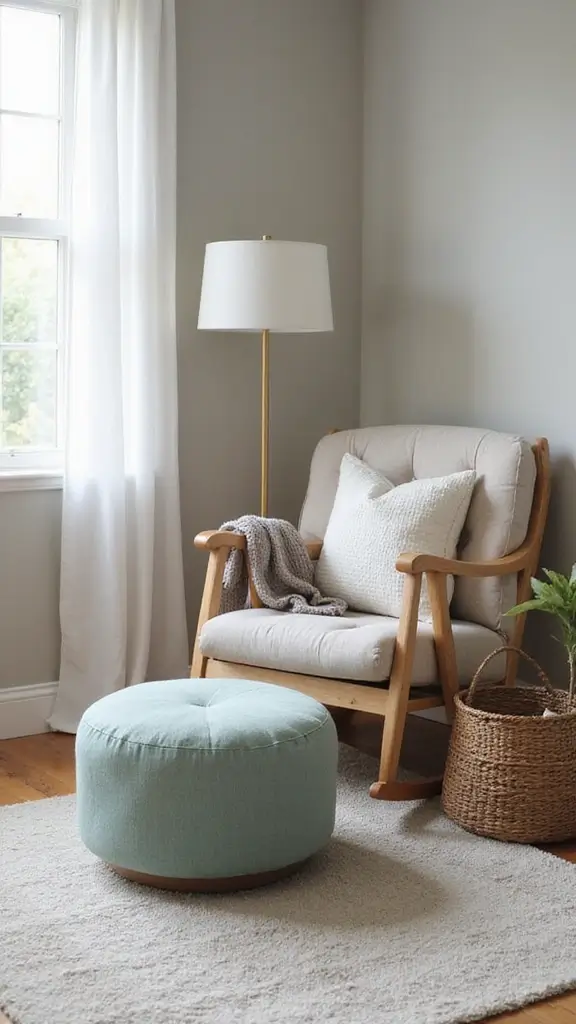
A storage ottoman pulls double duty in a nursery. It gives you a soft seat for late-night feedings and hides clutter inside its lid. Blankets, burp cloths, and small toys disappear into it in seconds.
Choose a firm, flat-top style so it also works as a footrest while you sit in the glider. Avoid oversized options. A compact square or rectangle fits neatly beside a chair without blocking the path through the room.
4. A Compact Glider or Rocking Chair
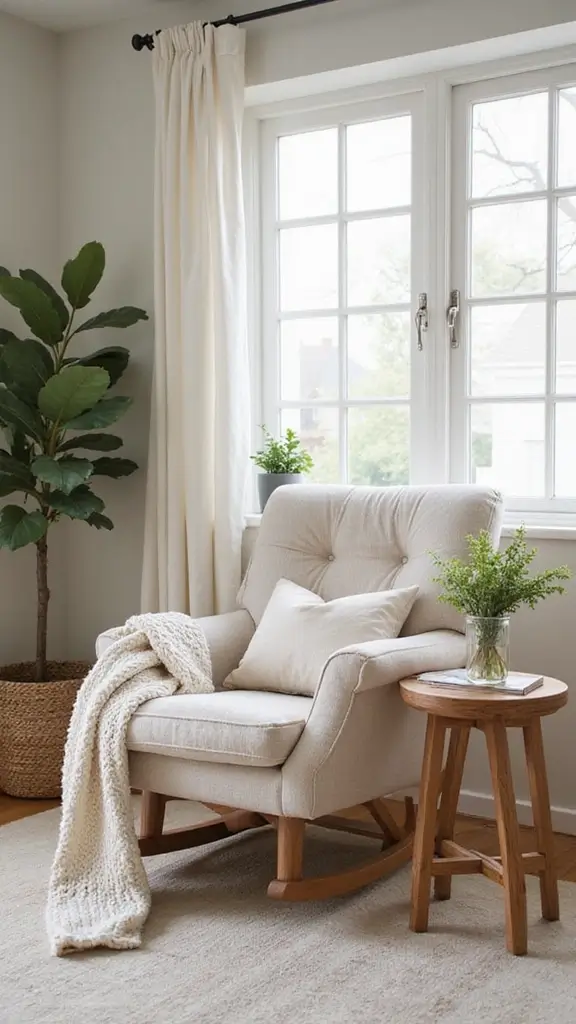
A full-size rocking chair can take up a surprising amount of floor space. A compact glider gives you the same soothing motion in a much smaller frame. Many models measure under 28 inches wide, which makes a real difference in a tight room.
Look for a glider with a low profile and no wide armrests that jut out. Some styles also include a small attached side pocket for a phone, remote, or burp cloth. That small detail saves you from needing a side table altogether.
5. Baskets for Quick and Easy Organization
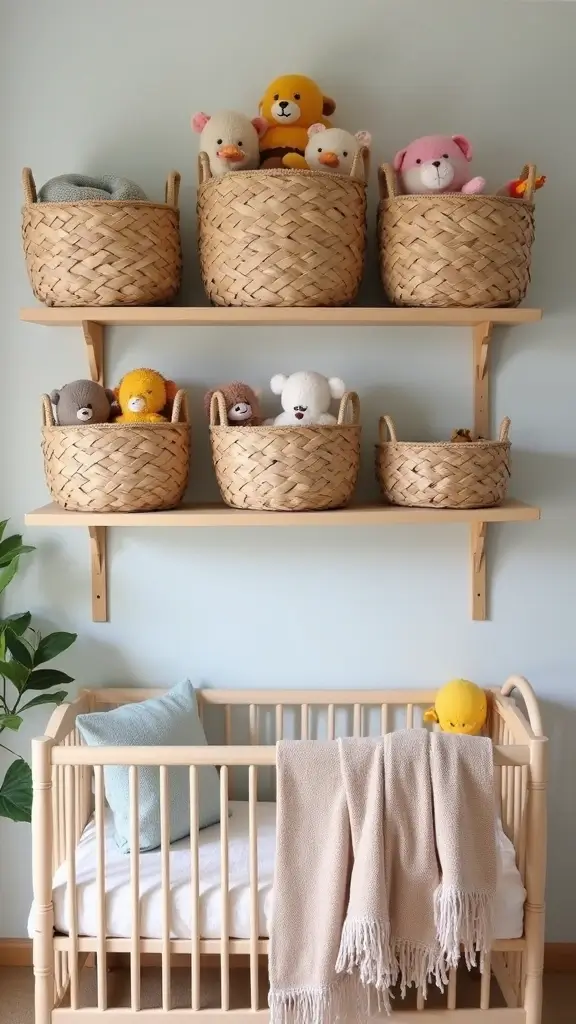
Baskets are one of the most flexible storage tools in a nursery. They sit on shelves, tuck under cribs, and line the floor along a wall. You can grab one and carry it to wherever you need it in the room.
Use different sizes for different jobs. Large baskets hold stuffed animals or extra blankets. Small ones keep pacifiers, hair clips, and nail trimmers sorted and easy to find. Woven or fabric baskets also add warmth to the room without adding visual noise.
6. A Pegboard for Versatile Wall Storage
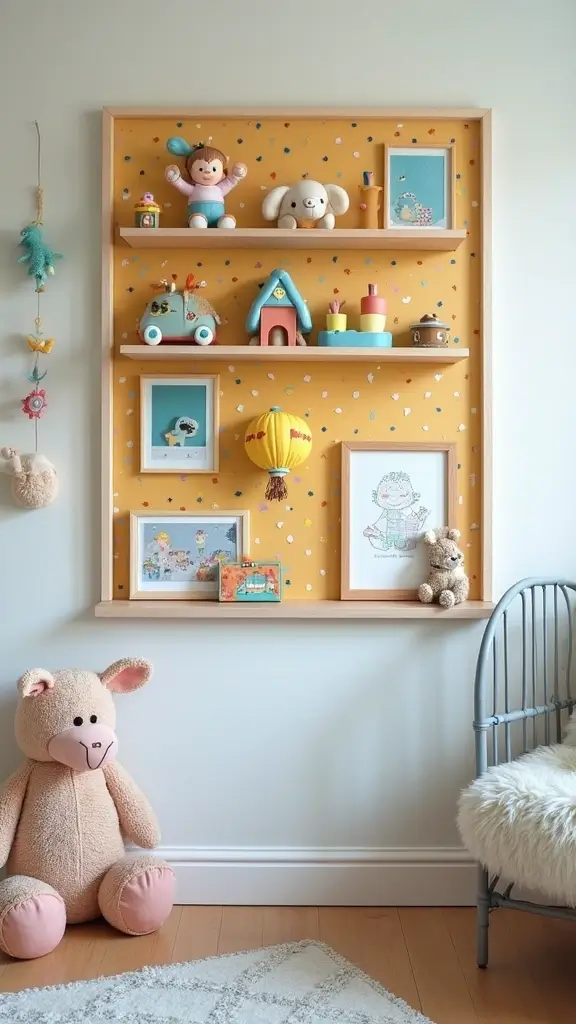
A pegboard mounted on the nursery wall gives you a fully customizable storage system. You add hooks, small shelves, and bins wherever you need them. As your baby’s needs change, you rearrange the layout in minutes.
This works especially well above a dresser or changing area. Hang small baskets for diaper supplies, hooks for baby carriers or bags, and a small shelf for a monitor or white noise machine. The pegboard keeps everything visible and off the counter.
7. Foldable Play Mats for a Flexible Floor Area
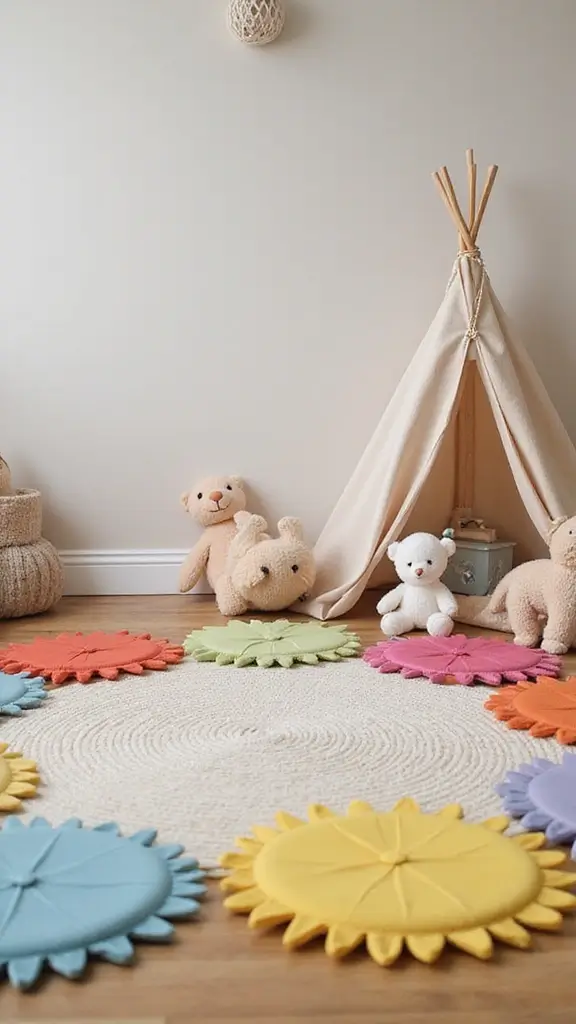
A dedicated play area does not need to be permanent. A foldable play mat gives your baby a safe, cushioned surface during awake time and folds away flat when not in use. This reclaims the floor for the rest of the day.
Many foldable mats store upright in a closet or slide under the crib. They come in foam or padded fabric and fold into a compact rectangle or square. This is one of the easiest ways to add function to a small room without adding clutter.
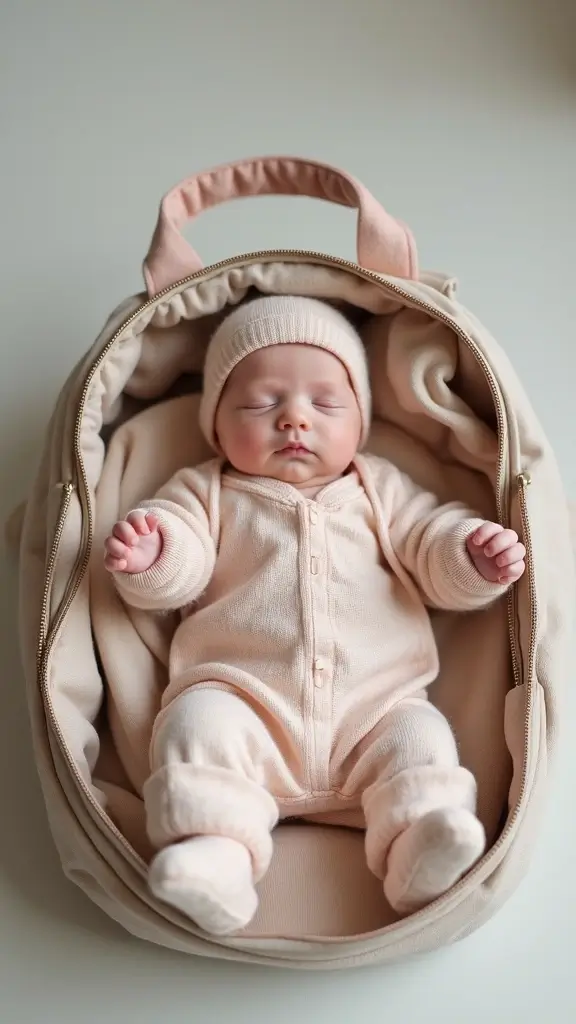
8. A Changing Basket to Minimize Furniture
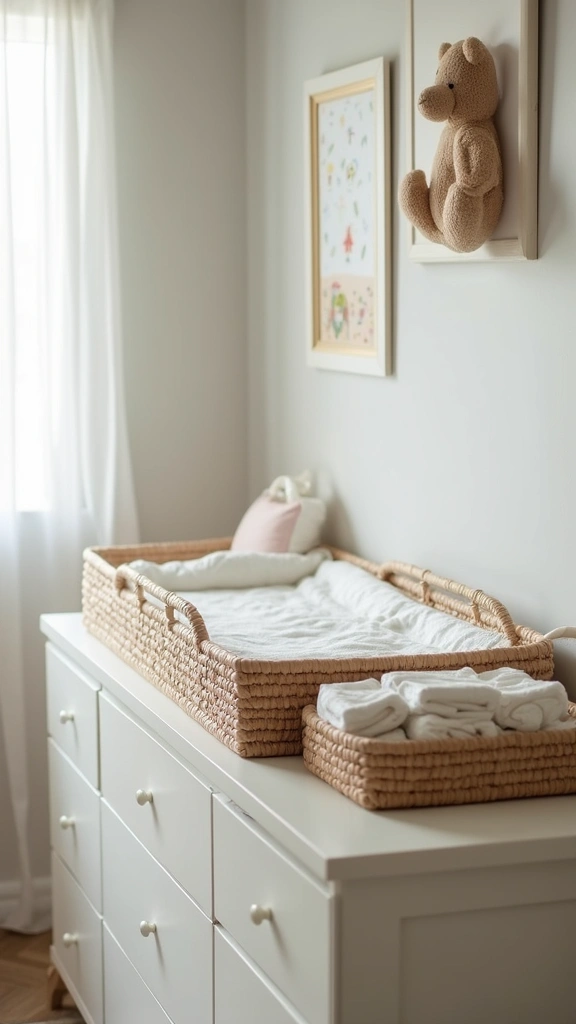
A changing basket is a low, woven basket with a padded insert that sits directly on the floor. It replaces a full changing table and takes up almost no space. When your baby outgrows it, it folds away or repurposes as a toy bin.
This option works well in rooms where a changing table simply will not fit. The basket sits at floor level, so you kneel beside it rather than standing. It is a practical, minimal solution that many parents in small apartments rely on.
9. Foldable Cribs for Maximum Flexibility
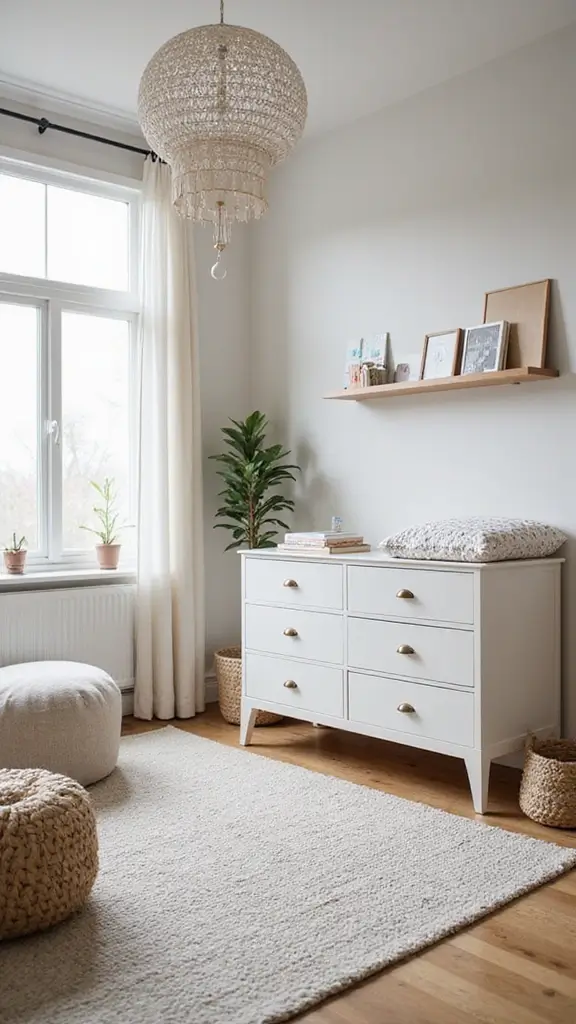
A foldable crib is one of the smartest investments for a small nursery. It functions as a full crib during sleep time and folds flat when you need the space back. Some models fold in under a minute without tools.
These cribs are also useful for families who share a bedroom with their baby. You can set it up at night and fold it away in the morning to restore the room. Look for models with safety certifications and a sturdy locking mechanism so the frame stays secure when in use.
10. Door Hooks for Hidden Storage
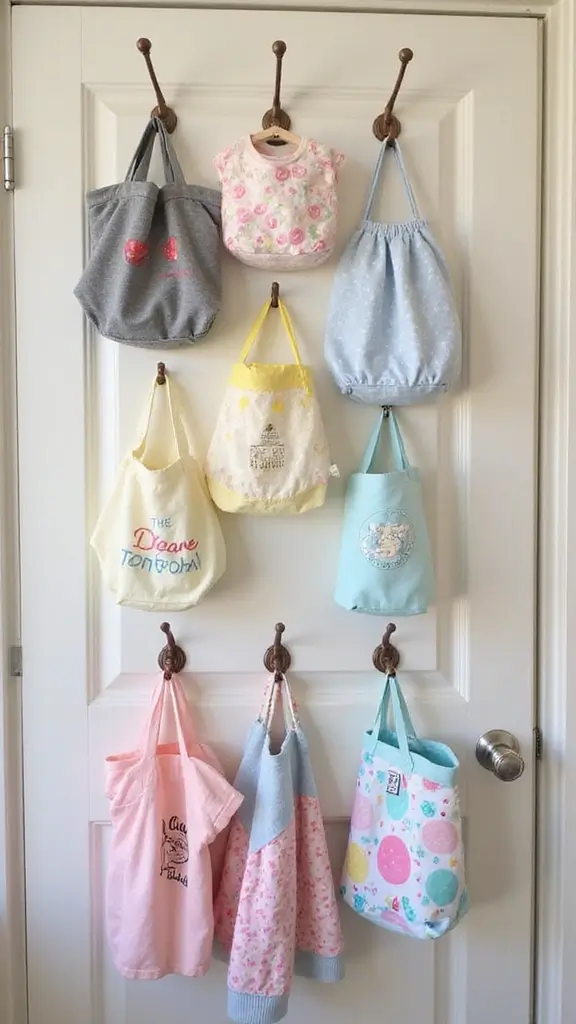
The back of a nursery door is often completely wasted space. A set of over-the-door hooks turns it into a storage zone for bags, swaddles, extra outfits, and baby carriers. Nothing takes up floor or wall space, and everything stays out of sight when the door is open.
Choose hooks rated for the weight you plan to hang. A simple row of four to six hooks handles most nursery needs. You can also find over-the-door organizers with pockets, which work well for smaller items like socks, mittens, and pacifier clips.
11. A Reading Nook with Low Shelves
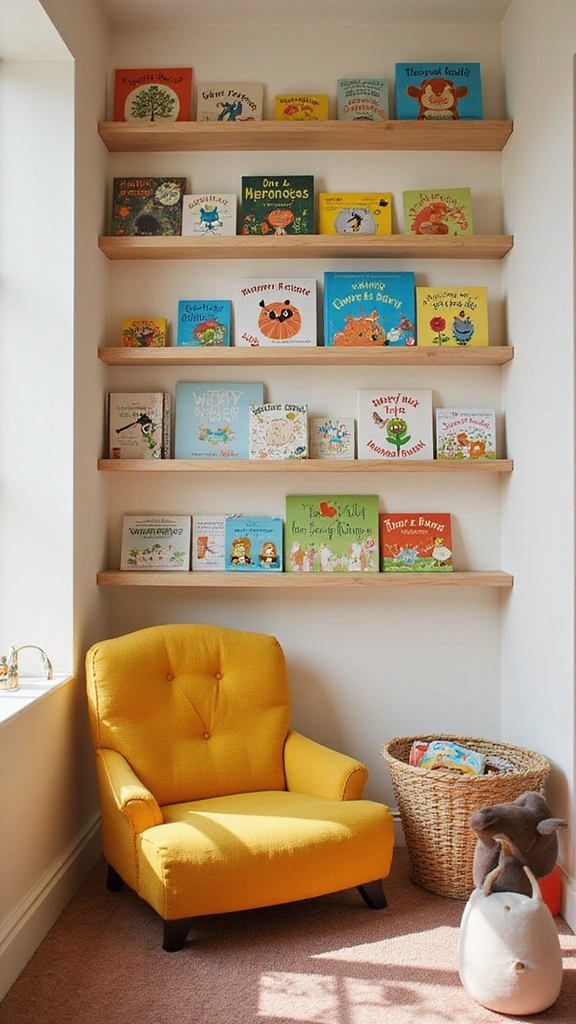
A small reading corner does not require much room. A low shelf mounted near the floor, paired with a soft cushion or small floor pillow, creates a cozy spot for storytime. It also keeps books organized and easy for little hands to reach as your baby grows into a toddler.
Forward-facing bookshelves show the covers of books rather than the spines. This makes it easier for young children to choose what they want. These shelves are shallow and mount flat against the wall, so they add almost no depth to the room.
12. Multi-Use Furniture That Grows with Your Baby
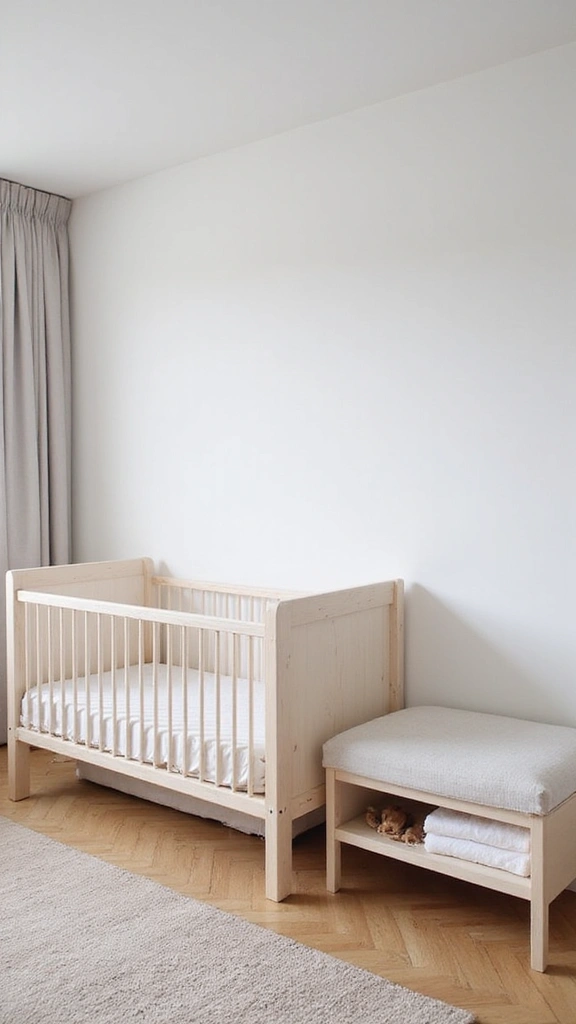
Furniture that serves more than one purpose is worth every dollar in a small nursery. A dresser that converts to a changing table, or a crib that later becomes a toddler bed, means you buy once and use for years. You also avoid the clutter of swapping out furniture as your child grows.
When shopping, check the conversion process. Some pieces convert with a simple kit included in the box. Others require separate purchases. Either way, multi-use furniture reduces the total number of items in the room, which directly reduces how crowded the space feels.
13. Clear Containers for Instant Visibility
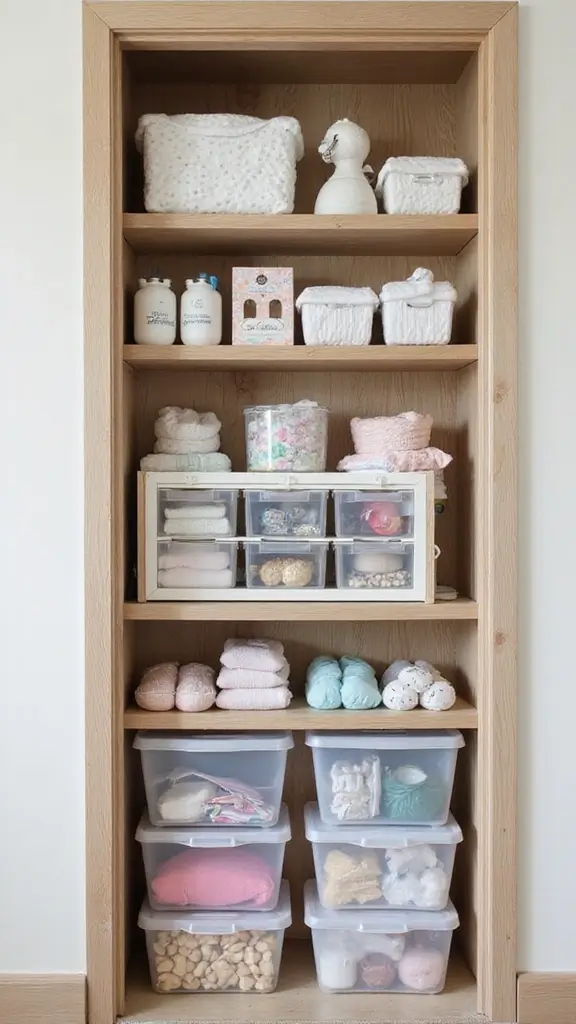
Clear storage containers remove the guesswork from finding things in a hurry. At 3 a.m., you do not want to open five bins to find the right size diaper. A clear container lets you see exactly what is inside without touching anything.
Use them on shelves, inside drawers, or stacked in a closet. Label each one with a simple tag so other caregivers can find things quickly too. Clear bins also make it obvious when supplies are running low, so you restock before you run out.
14. Over-the-Crib Mobile Storage
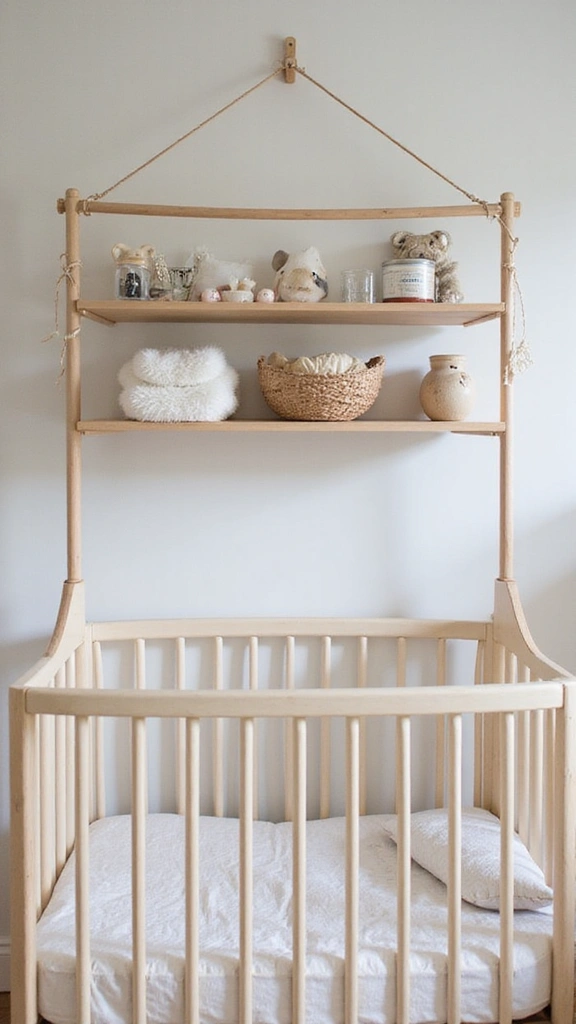
The space above the crib is almost always unused. An over-the-crib storage solution, such as a wall-mounted shelf or a hanging organizer positioned safely above the crib rail, puts that vertical space to work. It keeps nighttime essentials close without cluttering the floor.
Use this space for a small monitor, a white noise machine, or a nightlight. Keep anything stored here well out of reach of the baby and secured firmly to the wall. This approach is especially useful in rooms where the crib sits against a wall with no nearby surface for these items.
Bringing It All Together
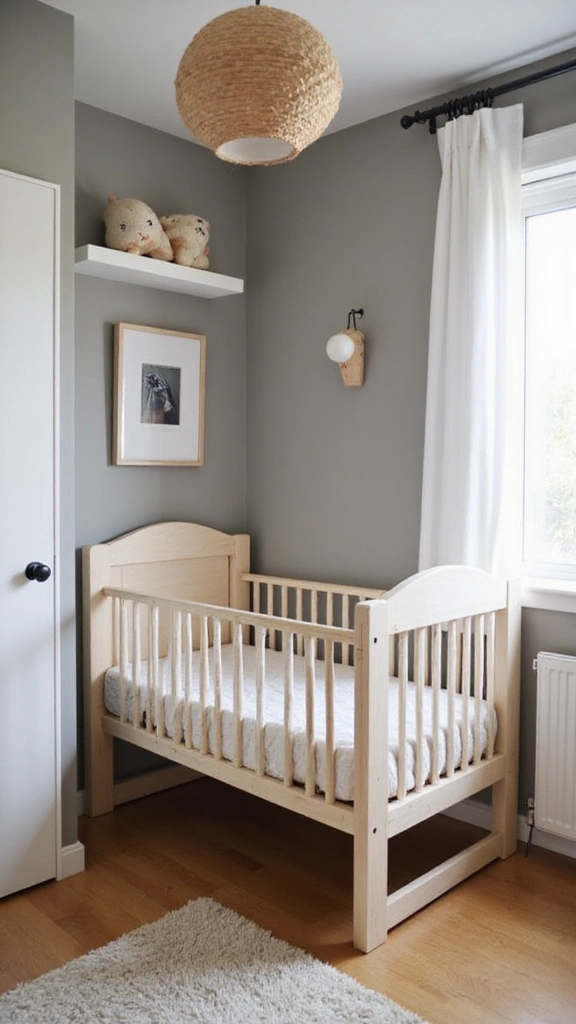
A small nursery becomes functional when you treat every surface as an opportunity. Walls, doors, the space above furniture, and the area under the crib all hold potential. You do not need to use every idea on this list. Start with the two or three that solve your biggest problems right now.
Think about your daily routine. What do you reach for most often? Those items need to be the most accessible. Everything else can go higher, deeper, or behind a door. When the room is organized around how you actually use it, even a very small space starts to feel calm and manageable.
The goal is not a showroom nursery. The goal is a room where you and your baby can rest, connect, and move through the day without frustration. Small rooms can absolutely do that job well.


Leave a Reply